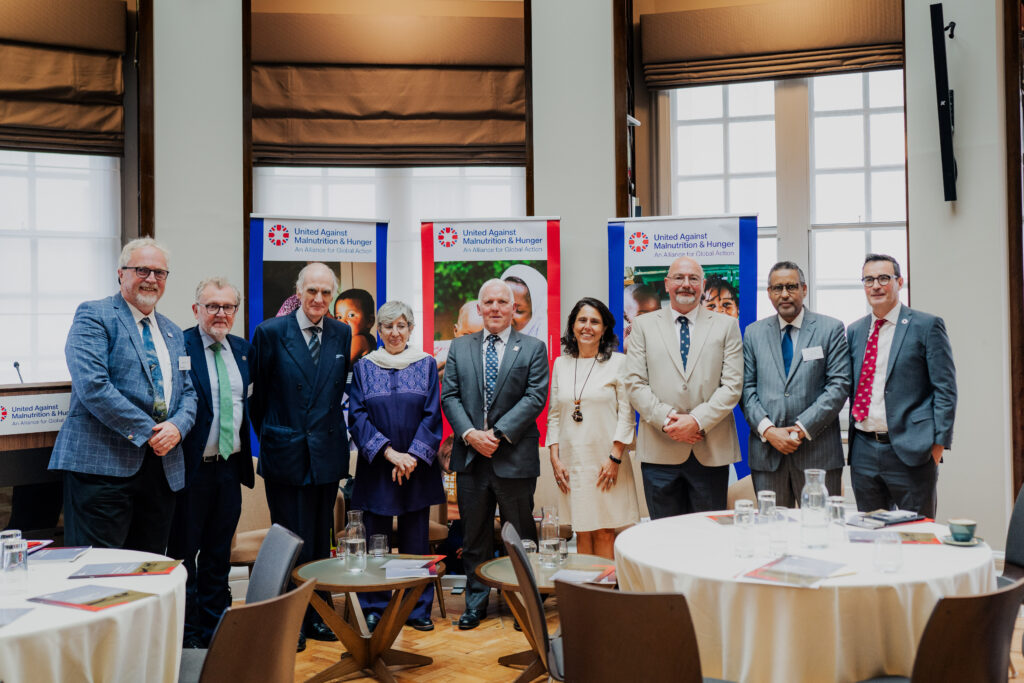
The UK hosts world‑leading research centres and scientists driving innovation in food security and nutrition. This expertise was displayed at A Showcase of British Science Expertise on Nutrition event, held in Parliament during British Science Week.
Co‑hosted by the All‑Party Parliamentary Group (APPG) on Nutrition for Development, and the Parliamentary and Scientific Committee, the event brought together researchers from Exeter University, the John Innes Centre, the Agriculture, Nutrition and Health (ANH) Academy at the London School of Hygiene and Tropical Medicine, and Reading University.
The Jubilee Room buzzed with animated conversations as researchers briefed cross‑party Parliamentarians on innovative technologies and emerging scientific developments aimed at improving how food is produced, distributed, and consumed.
Nutrition is fundamental to health and development, making it strategically important for the UK to contribute to global efforts to tackle malnutrition. Yet malnutrition remains the leading cause of death among children under five worldwide and leaves lasting impacts on education, productivity, and economic stability. These pressures fuel instability, migration, and conflict.
United Against Malnutrition & Hunger (UAMH) serves as the Secretariat for the APPG on Nutrition for Development, and its former Co‑Chair, Steve Race, MP for Exeter, opened the event.
In his remarks he highlighted how growing pressures on global food systems—from conflict and climate change to economic shocks and inequality— are contributing to rising malnutrition, with 600 million people projected to face hunger by 2030.
“These are real world challenges your institutions are helping to address in equitable partnerships with institutions and researchers in the Global South,” he said, having recently raised the importance of this work with the Minister for International Development.
He urged participants to engage with the Foreign and Commonwealth Development Office (FCDO) Global Partnerships Conference in May.
“The UK undoubtedly has a unique role to play, contributing to global food security, driving innovation, and delivering mutual benefits in the UK and across the world. We must continue to support and invest in the critical research you and other institutions do across the country,” Steve Race said.
UAMH produced a booklet outlining nutrition projects undertaken by the six centres in partnership with researchers, scientists, and policymakers in high‑burden countries. These innovative collaborations address the root causes of malnutrition and advance building resilient global food systems. Advances include climate‑ and disease‑resilient crops, biofortified foods, and improvements in planting, harvesting, storage, and transportation. Download the booklet A Showcase of British Science Expertise and Partnerships on Nutrition.
Leaders of British research organisations highlight how scientific expertise can prevent and reduce the impacts of hunger. Interdisciplinary partnerships—spanning nutrition, economics, agriculture, trade, gender, and climate science—are transforming agri‑food systems to deliver nutritious, affordable diets while responding to climate challenges.
Good nutrition underpins individual and global development, supporting improved health, education, economic prosperity, and stability.
However, sustained progress requires long‑term funding to facilitate the full scientific pathway from discovery to delivery, a point partners emphasised to Parliamentarians who attended.