


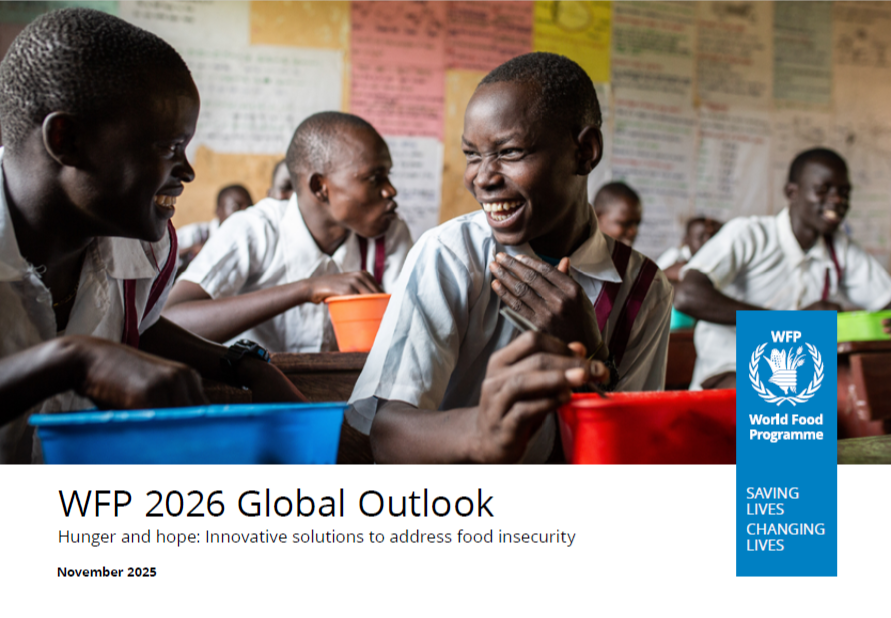
Hunger and Hope: Innovative solutions to address food insecurity, World Food Programme’s 2026 Global Outlook, paints a stark picture of global food insecurity but also highlights pathways for hope.
An estimated 318 million people face acute hunger – double pre-pandemic levels – with 41 million at Emergency levels or worse (IPC Phase 4+). Two famines have been confirmed in Gaza and parts of Sudan, marking the first time this century famine has struck two countries simultaneously. Sixteen hunger hotspots, from Haiti and Mali to Afghanistan and Yemen, remain at high risk. Conflict drives 69 percent of hunger, while climate shocks – droughts, floods, and storms – compound the crisis. Syria’s crop production is down 60 percent, and Hurricane Melissa recently devastated Jamaica, Haiti, and Cuba.
Despite these challenges, the Outlook emphasises solutions. WFP aims to assist 110 million people in 2026 with an operational requirement of US$13 billion. Innovation and partnerships are central to this effort: AI-powered tools like SCOUT optimize supply chains, saving millions, while digital cash transfers and anticipatory action protect lives before disasters strike – every dollar invested saves seven dollars in losses.