


Summary
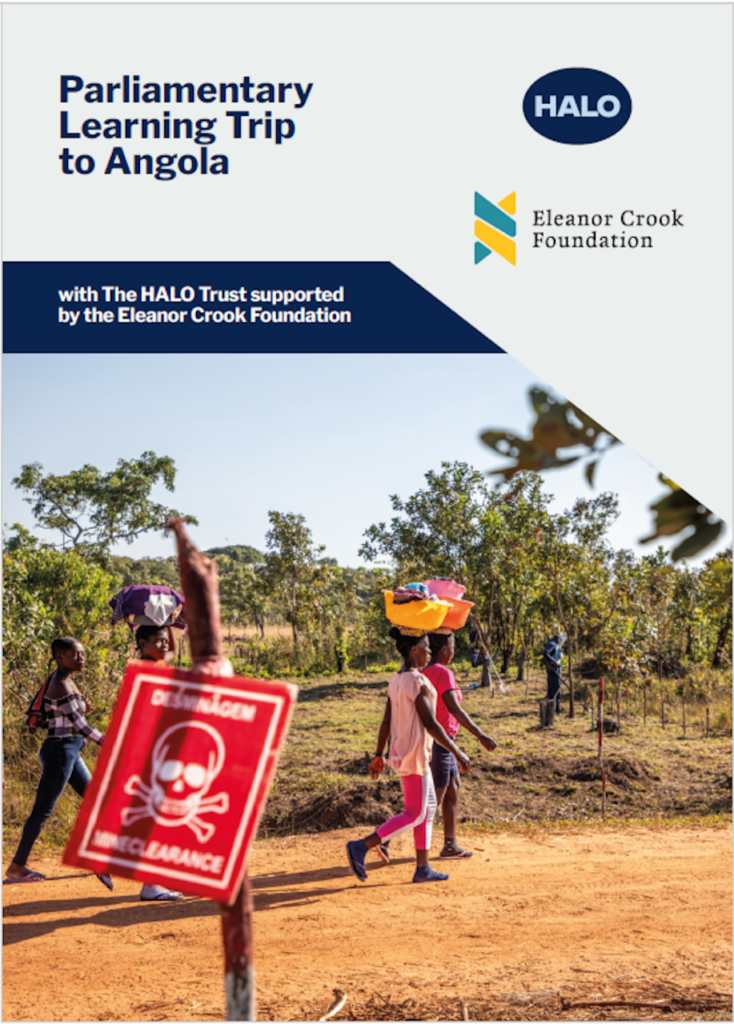
A cross party delegation to Angola, hosted by The HALO Trust in partnership with the Eleanor Crook Foundation (ECF), provided MPs with direct insight into how mine contamination, food insecurity, and chronic malnutrition intersect to shape Angola’s development trajectory. Angola is one of the most mine affected countries in the world, yet it is also a country with significant economic potential, a strong commitment to reform, and a clear ambition to become landmine free.
The Co-Chair of the APPG on Nutrition for Development, Alan Gemmel MP, was among the delegation which saw how mine clearance is not only a humanitarian necessity but a strategic enabler of economic growth, agricultural expansion, and improved nutrition outcomes. Angola’s government is prioritising development, trade, and diversification, and recognises that progress in these areas depends on tackling the structural drivers of malnutrition and the legacy of conflict. Crucially, the visit also highlighted that malnutrition remains a largely underreported national challenge. Despite Angola’s economic potential, the country faces extremely high rates of chronic malnutrition.
This is compounded by recurrent droughts, limited access to nutritious foods, and widespread poverty, leaving millions of Angolans food insecure and deepening regional inequalities. Yet malnutrition receives far less international attention than other development issues, masking its profound impact on human capital, productivity, and long term economic growth. Recognising malnutrition as a central development barrier – not just a health issue – is essential. Addressing it requires coordinated action across sectors, from mine clearance and agricultural recovery to water access, health systems strengthening, and social protection. The delegation’s findings underscore that without tackling this silent crisis, Angola’s broader ambitions for prosperity, stability, and partnership with the UK will remain constrained.
Click download to read the full report.