It is an irrefutable truth. To survive and thrive, humans need access to good nutrition.
Malnutrition, the biggest killer of children under five, is a disruptor that unleashes a domino effect of disaster, damaging the brains, bodies, and health of survivors, weakening economies, perpetuating poverty, fuelling community misery and global unrest.
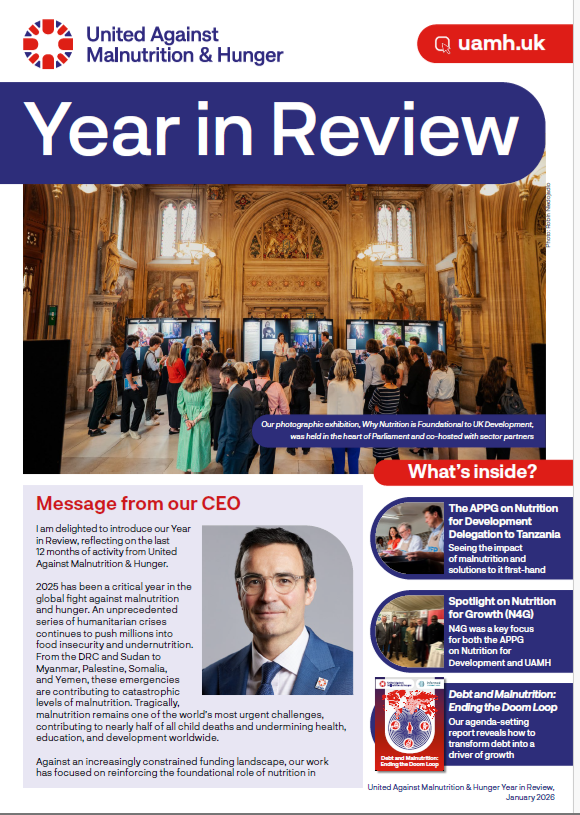
Alarmingly, United Against Malnutrition & Hunger’s new report, Debt and Malnutrition: Ending the Doom Loop, reveals that debt makes malnutrition worse. Cuts to Official Development Assistance (ODA) make its findings and recommendations particularly pertinent.
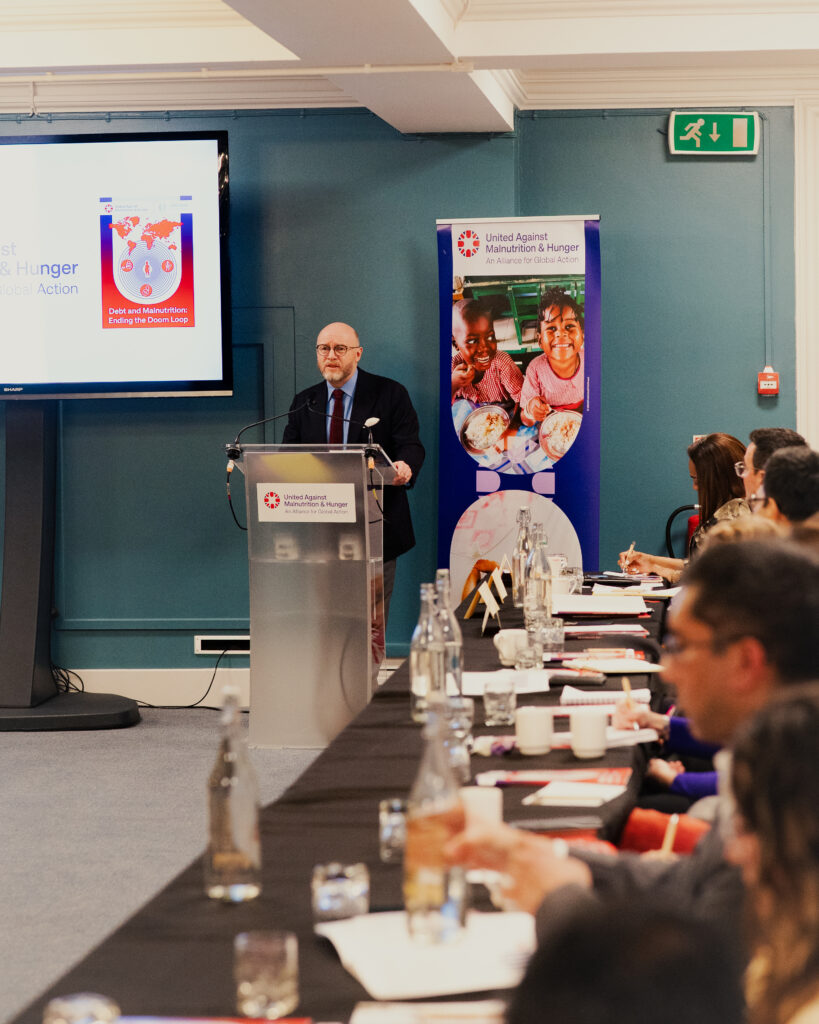
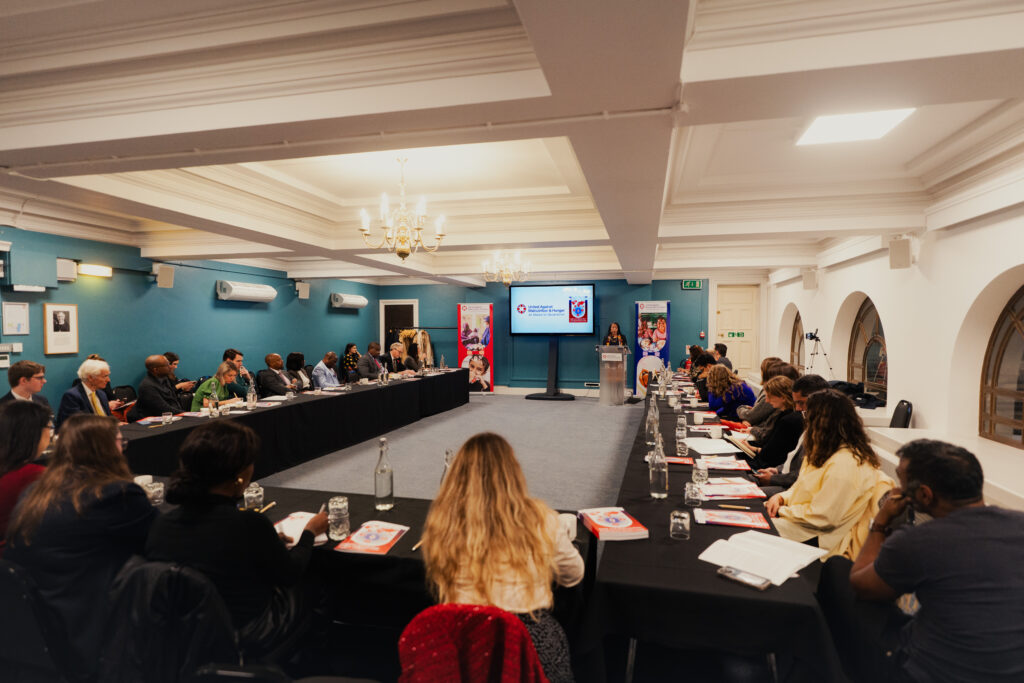
Parliamentarians, High Commissioners and NGOs congregated for the report’s launch in the Central Hall Westminster.
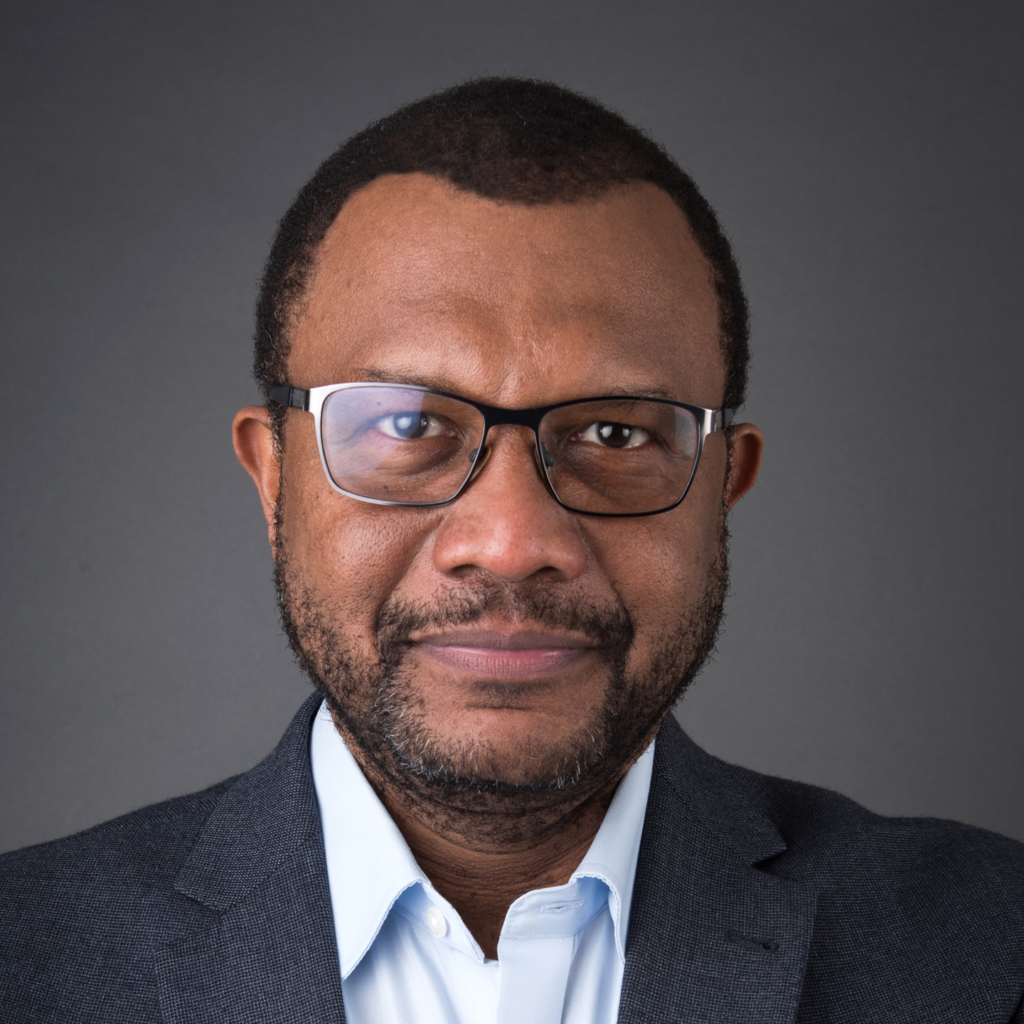
The erudite panel event was chaired by Arunma Oteh, former Treasurer and Vice-President of the World Bank and current Chair of the Royal African Society. Also speaking were Rt Hon Liam Byrne MP, Chair of the Business and Trade Committee, Her Excellency Macenje “Che Che” Mazoka, The High Commissioner of Zambia to the UK, and United Against Malnutrition & Hunger’s CEO Jonny Oates.
Arunma Oteh begun by saying that as a Nigerian and a banker she had seen the impact of the debt and malnutrition doom loop first hand. Malnutrition is estimated to cost African economies 16.5% of their GDP (Gross Domestic Product) annually, a direct result of the long-term effect of stunting on the future workforce’s physical and cognitive capabilities. “For a continent with 60% of its population under 25 years of age, this is a huge challenge,” she said.
Commissioned by UAMH from Informed International, Debt and Malnutrition: Ending the Doom Loop analysed data from nine low- and middle-income countries (LMICs), Bangladesh, The DRC, Ethiopia, Kenya, Malawi, Nepal, Nigeria, Pakistan, and Sierra Leone, designated Flagship countries by the Foreign and Commonwealth Development Office (FCDO). Between 2010 and 2023, their average debt burden surged by almost 250% far outpacing economic growth and dwarfing payments made in ODA.
According to the United Nations, in 2024, Africa’s debt servicing costs were over US$94billion compared with total ODA to the continent of US$42 billion. Countries had to prioritise debt payments above people, spending more on debt, than on health and education.
Introducing the report, Jonny Oates warned that nutrition programmes are often the first casualties of austerity. Health workers are let go, school feeding programmes stop, nutrition supplies run out, while inflation makes a healthy diet unaffordable. The consequences are profound. Malnourished populations become more susceptible to disease and educational outcomes deteriorate. Inequality widens, trapping people and countries in poverty, creating a doom loop.
Indeed, the research revealed that by 2023, one in five people were malnourished, two in five women of reproductive age were anaemic, and one in three children under five were stunted.
Part of the problem is the increase in the proportion of debt owed to private creditors. These loans often have higher interest rates and shorter maturities. In Kenya, a case study in the report, 23% of external debt is held by private or commercial lenders yet is responsible for 58% of the country’s total external debt servicing costs.
It is an issue The Rt Hon Liam Byrne Labour MP for Birmingham Hodge Hill and Solihull North, spoke to. Endorsing UAMH’s report as an agenda setter, he said that debt is one of the big blockers to the Sustainable Development Goals (SDGs) and called for greater transparency and scrutiny. He highlighted the fact that 40% of LMIC’s debt goes to private creditors. The people of the world have the right to know the bargains their countries are entering. The International Monetary Fund (IMF) and the World Bank need to work much harder with Parliamentarians so that the lenders’ books are open not shut, he said.
Her Excellency Macenje “Che Che” Mazoka, The High Commissioner of Zambia to the UK emphasised the importance of debt transparency. This is one of the report’s recommendations to turn debt into a driver of progress by improving nutrition and cannot come soon enough.
She highlighted the fact that Zambia has one of the world’s highest malnutrition rates, where up to 35% of children under five are stunted, and national debt has jumped into the billions. Debt and malnutrition are deeply connected, she said.
Her Excellency cited the report’s recommendations as clear ideas for a way forward. Nutrition budgets must be protected because nutrition is a necessity, not a luxury. Debt relief should be linked to nutrition swaps, so countries such as Zambia can invest in people not just pay debts. And there should be transparency in negotiations, so they do not come at the cost of children’s health or women’s wellbeing.
She argued that the UK should use its influence to address debt because the link between debt and malnutrition has global consequences, such as migration. “Let us not forget that behind every debt figure is a child, a family, in which futures can be unlocked or lost,” she said.
Interventions were made by Monica Harding MP for Esher and Walton, and Liberal Democrat International Development Spokesperson, His Excellency Jeremiah Nyamane Mamabolo, South Africa’s High Commissioner to the UK, and Brian Mathew Liberal Democrat MP for Melksham and Devizes. Dr Beccy Cooper Labour MP for Worthing West also attended.
Monica Harding stated that nutrition is a smart investment, for which funding should be protected. She welcomed the report’s finding that UK investment in global nutrition has real impact and correlates with stronger domestic investment by LMICs in essential services, which reduces rates of malnutrition and increases resilience to economic shocks.
His Excellency Jeremiah Nyamane Mamabolo emphasised that answers are urgently needed because tackling debt and malnutrition is central to driving progress on the SDGs.
Brian Mathew MP, who had a former career in international development, commented that cuts to development assistance had caused a cliff-edge situation and a challenge to rise to. Debt reform can be part of that, he said.
Results UK, Debt Justice, and Christian Aid contributed knowledgeable and thoughtful comments to the discussion. In 2027, the UK will host the G20 which could be a focus on which to build this campaign, a point made by Baroness Sugg and others.
UAMH hopes the launch of this research will lay a path to begin to break the doom loop, which as Jonny Oates said, is not an abstract concept, but a story written in misery inflicted on the lives of millions of people.
As Her Excellency Macenje “Che Che” Mazoka told guests. “Nutrition is the foundation for everything we want to achieve, from economic growth to lasting peace. You have a hand in that.”
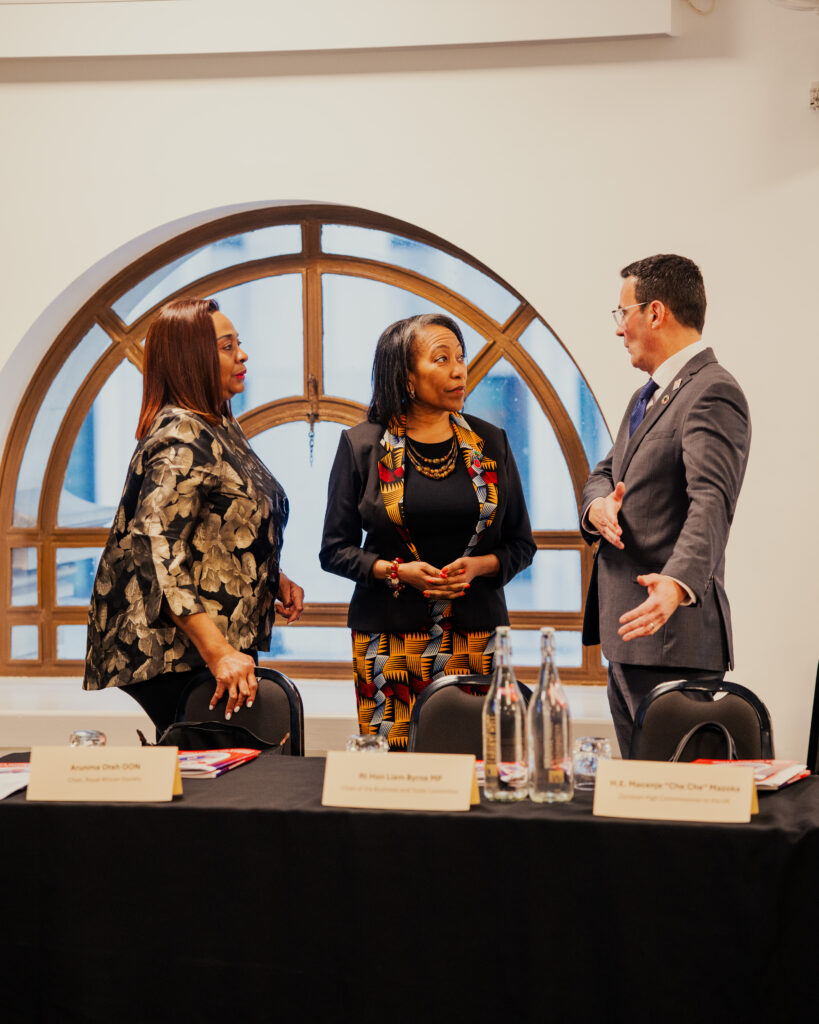
From left: Arunma Oteh; Her Excellency Macenje “Che Che” Mazoka, and Jonny Oates. Credit Robin Niedojadlo