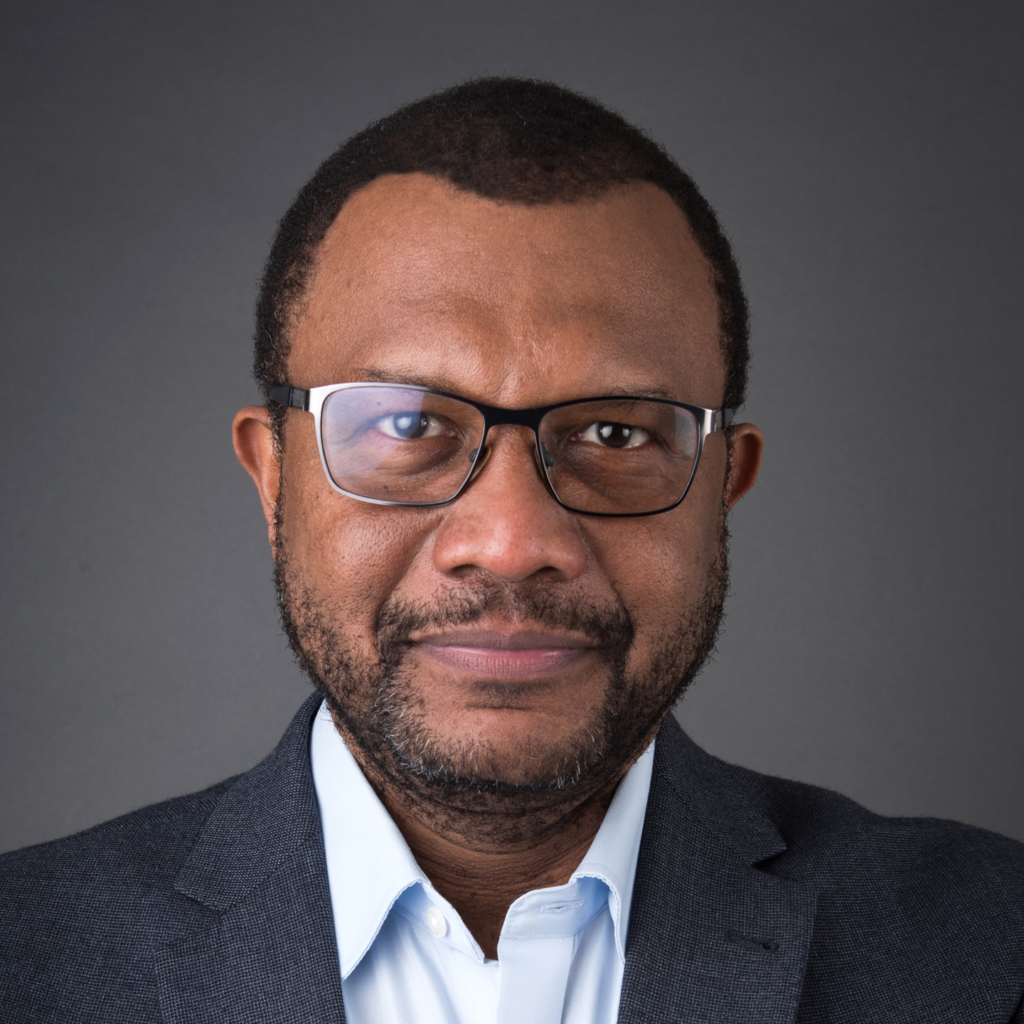
Mykay still thinks about his friend Emmanuel, who was “a genius in a different league” and influenced his decision to join UAMH’s Board.
Growing up in Sierra Leone’s capital Freetown, Mykay came from a relatively well-off family but attended a school with children from all backgrounds, including some who were “hugely hungry” like Emmanuel.
One memory stands out: visiting his classmate’s house and the shock he felt to his “bones at the wretched poverty” he saw there.
“I thought, this is awful. Emmanuel could have done anything, but hunger and circumstances would inevitably hold him back. Joining UAMH is personal to me,” Mykay explains.
Now an entrepreneur, Mykay attributes his comparative success to those early advantages. His start-up develops AI technologies to support emergency service workers in managing psychological trauma.
“The idea is to help protect the protectors,” he says.
Blending business with a social cause is a shift from his previously purely commercial background working for companies including Price Waterhouse Coopers, Cola-Cola, Aviva and Lloyds Banking Group. A journey that began with arriving in the UK as a student. The outbreak of brutal civil war in Sierra Leone in 1991, which lasted 11 years, prevented him from going back as planned.
Eventually, the pull of Africa was too great, and he returned there to launch an electricity generation supply business, underscoring that infrastructure fuels progress just as nutrition powers human development.
These days, the closest he gets to experiencing hunger is fasting during Ramadan: “It is not comparable to acute hunger but gives you an idea of its impact. It tires and shocks depletes you physically and mentally, even whilst being spiritually uplifting,” he says.
The shock of poverty and hunger is a recurrent theme throughout our conversation, and Mykay believes the emotion sums up the public response to Michael Buerk’s 1986 broadcast on the famine in Ethiopia. “People have become far more compartmentalised. There is less empathy now,” he says.
Determination to counter that apathy propelled him to join the UAMH alliance, declaring, “We must not give up!” He believes that appealing to people’s heads, as well as their hearts, is the pragmatic approach.
The way he sees it, “People do not leave their homes in half-decent countries to emigrate abroad, on a whim. Poverty forces them to move and makes migration inevitable. So, the financial cost of poverty is higher than helping to resolve it.”
Mykay ends by recalling Emmanuel again. “His mind was incredible. But it was inevitable that hunger and poverty would stifle his immense potential.”
The tragedy is that malnutrition remains the biggest killer of children under five, survivors are permanently physically and cognitively damaged, so there are hundreds of millions of children like Emmanuel today.
That is why investment in nutrition is an investment in human capital and a solution to a more stable and secure world.